Building an Intelligent Chemical Foundation, Driving High-quality Industry Leap—Redcoast Joins Hands with Sophon Future for a Successful Debut at the 2025 Yangtze River Delta International Chemical Industry Exhibition

Redcoast2025-11-25
On November 4-6, 2025, The Yangtze River Delta International Chemical Industry Exhibition was successfully held in Nanjing. This year’s exhibition brought together leading companies and technological forces from the fields of fine chemicals, chemical new materials, technical equipment, and intelligent manufacturing. Under the theme “Innovation-Driven, Green Transformation, Synergy for a Shared Chemical Future,” it comprehensively displayed the industry’s latest achievements and future directions.
Redcoast joins hands with Sophon Future for exhibition debut, featuring core displays on “Intelligent Industrial Foundation, Digital Twin Factory, and Predictive Maintenance System” at Booth T10, Hall A2.
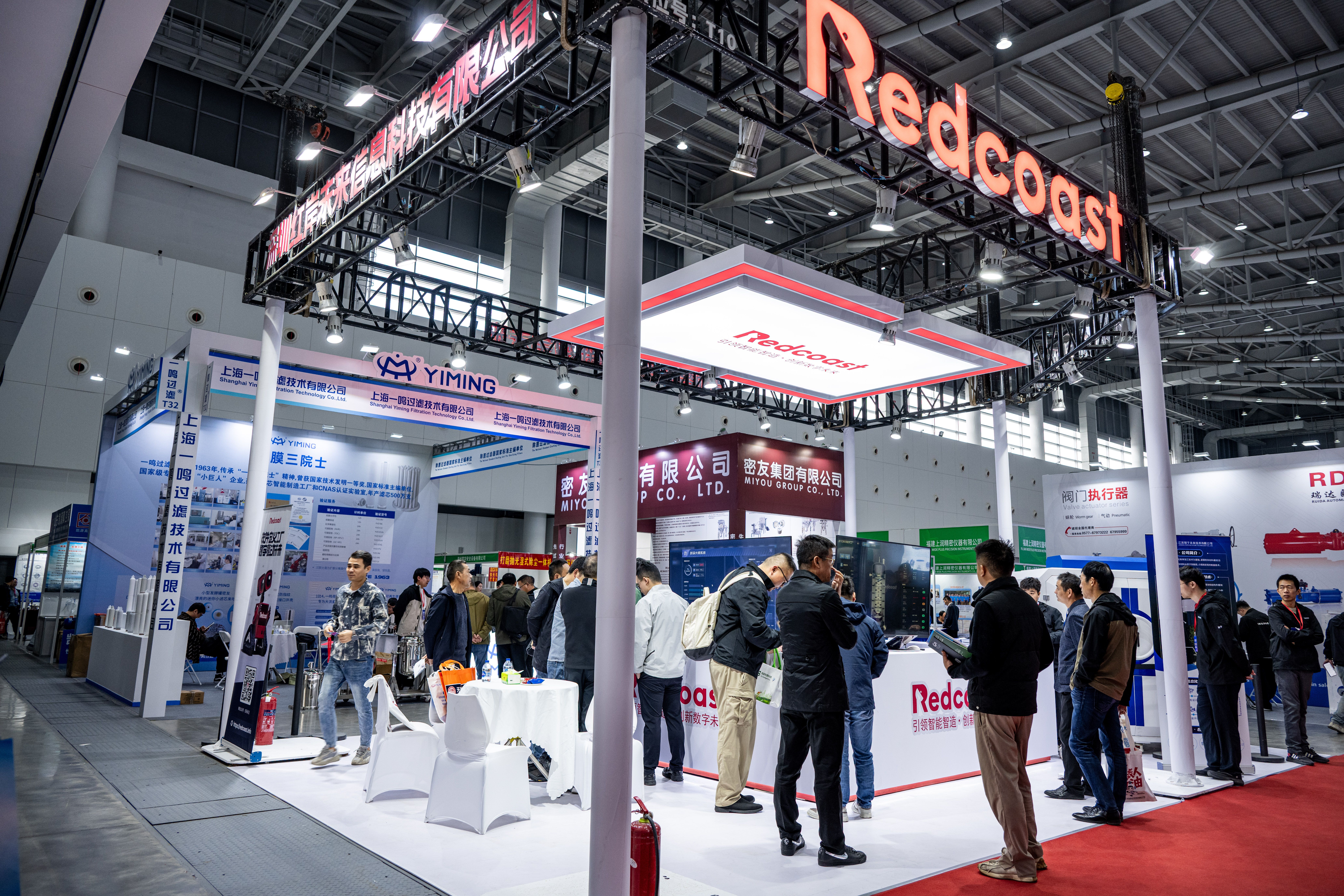
At the exhibition, Redcoast comprehensively demonstrated its technological prowess in the digital and intelligent transformation of the chemical industry through the display of HaloMES Digital Twin Factory, exhibition of Equipment Prediction and Health Management System, visual demonstration of chemical equipment, and presentation of LFP Digital Twin application cases.
Simultaneously, Sophon Future showcased its self-developed ALD advanced equipment in the exhibition area. Together with Redcoast, the two companies jointly presented a systematic technical framework and implementation capabilities for the digital, intelligent, and safety-oriented development of the chemical industry.
Throughout the three-day exhibition, the joint booth attracted significant attention and garnered high acclaim from numerous industry experts, plant managers, and technical leaders, who stopped by for in-depth exchanges.
I. On-site Exhibition Highlights
1. Digital Twin Factory Demonstration: Showcasing Full-process Transparent Management
The booth showcased the application framework of the digital twin for chemical plants and established a production operation scenario that integrates the virtual and the physical world. The booth demonstrated the following capabilities systematically:
- Real-time data acquisition and virtual mapping of core equipment/production lines
- Process parameter modeling and visual traceability
- Health status prediction and energy consumption optimization suggestions for key devices and equipment
- Closed-loop management of production safety, including production scheduling and remote collaboration
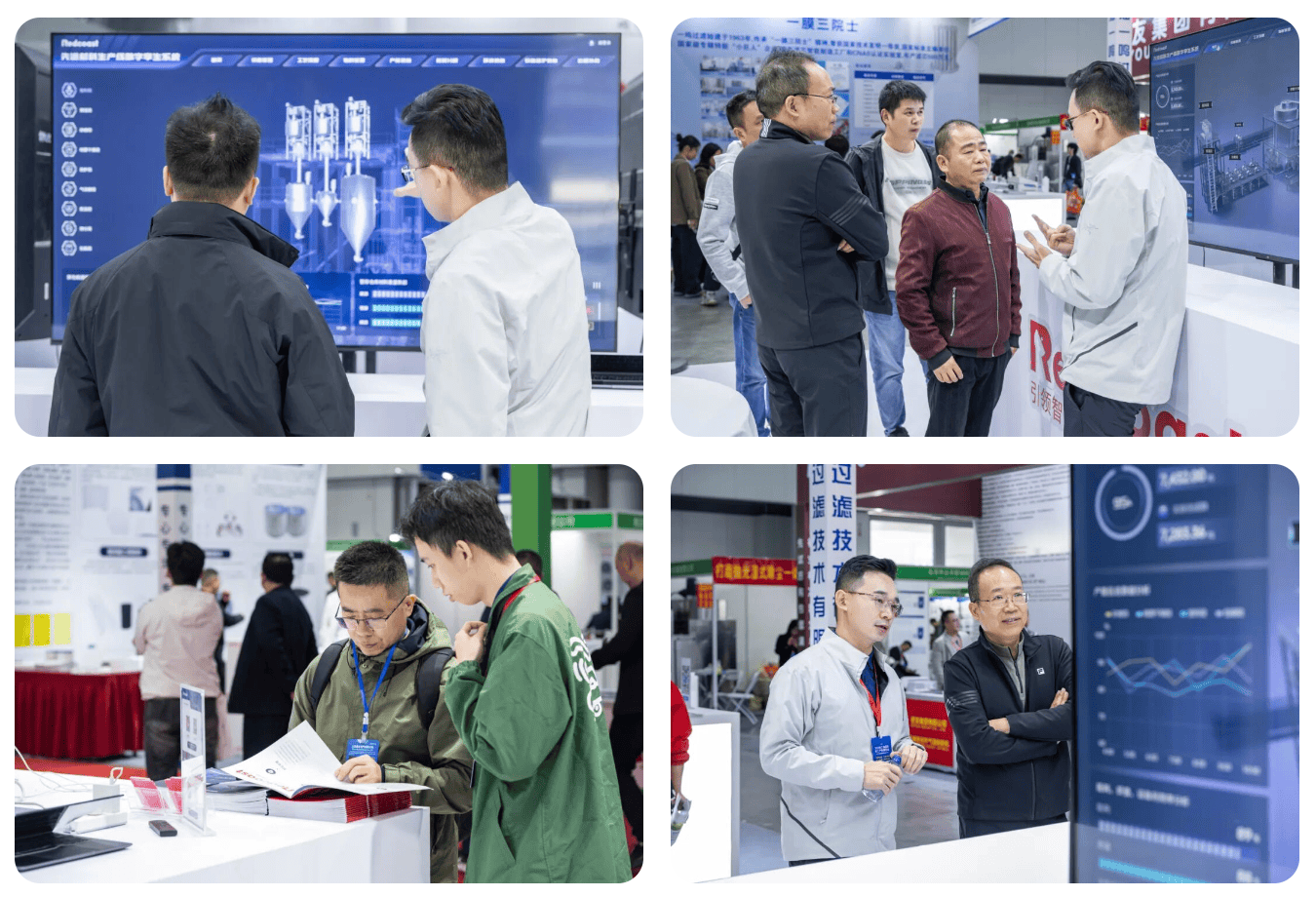
Through the synergy of four core domains—equipment, energy consumption, production, and safety—visitors can witness the pathway for an intelligent chemical plant to transition from “real-time state representation” to “future behavior simulation.”
2. Intelligent O&M System: Transitioning from Reactive Maintenance to Prediction & Preemptive Control
Relying on the sensing system, industrial edge computing, and equipment model library, the exhibition showcased the data from multiple sensors of the equipment (such as vibration, temperature, pressure, flow rate, current, voltage, and acoustic signals) to identify potential anomalies through both traditional threshold-based judgment and intelligent algorithms.
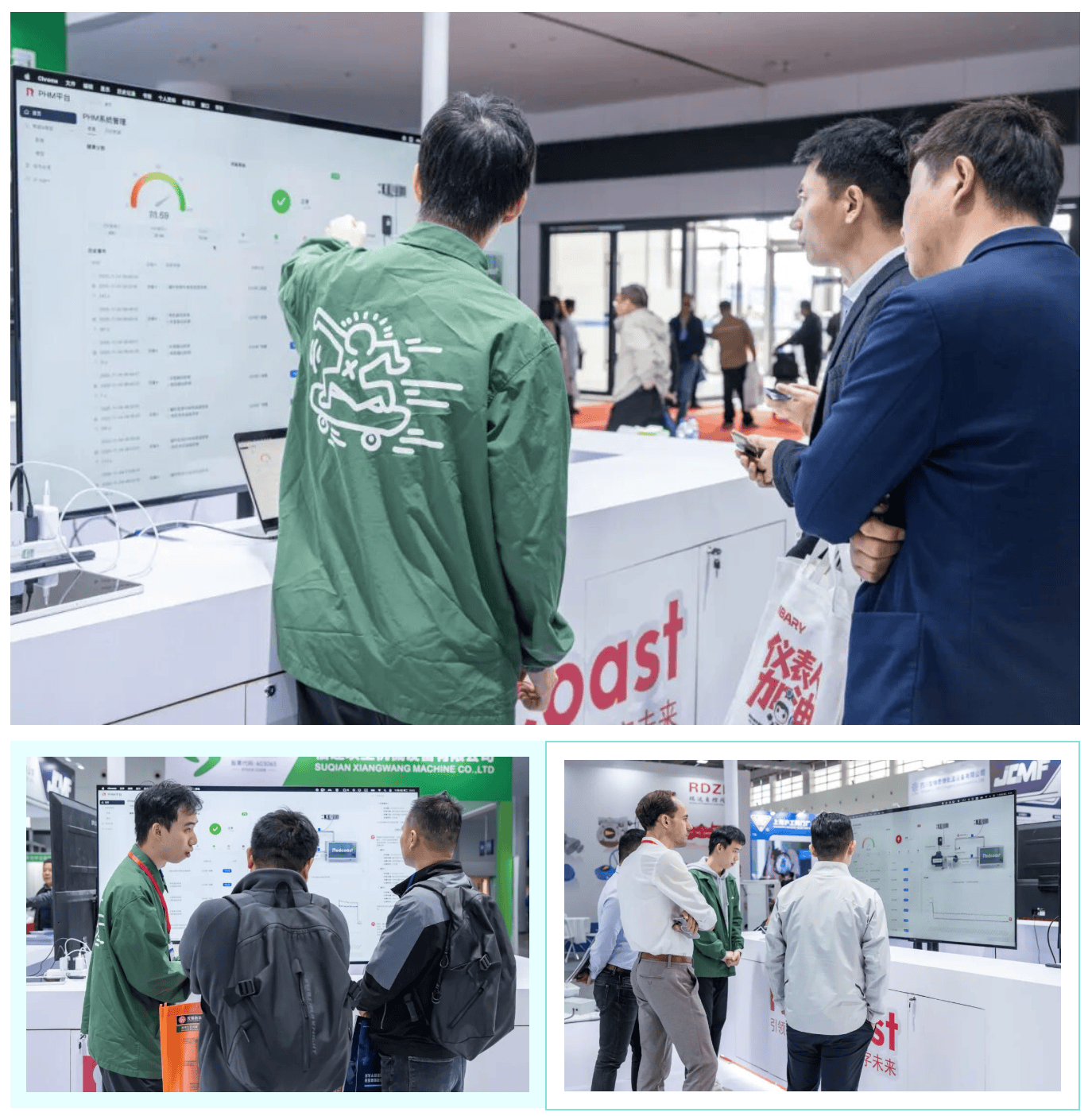
The core functions of the system mainly include fault prediction, intelligent decision-making and tiered alerts, enabling end-to-end Agent linked push and long-term equipment health management. It also supports full lifecycle management of assets such as equipment inventory, equipment spot checks and patrol inspections, equipment maintenance, repair reporting and execution, and spare parts management.
The system embodies the concept of “condition-driven maintenance,” enabling field experts to recognize the economic benefits and risk control value of predictive maintenance.
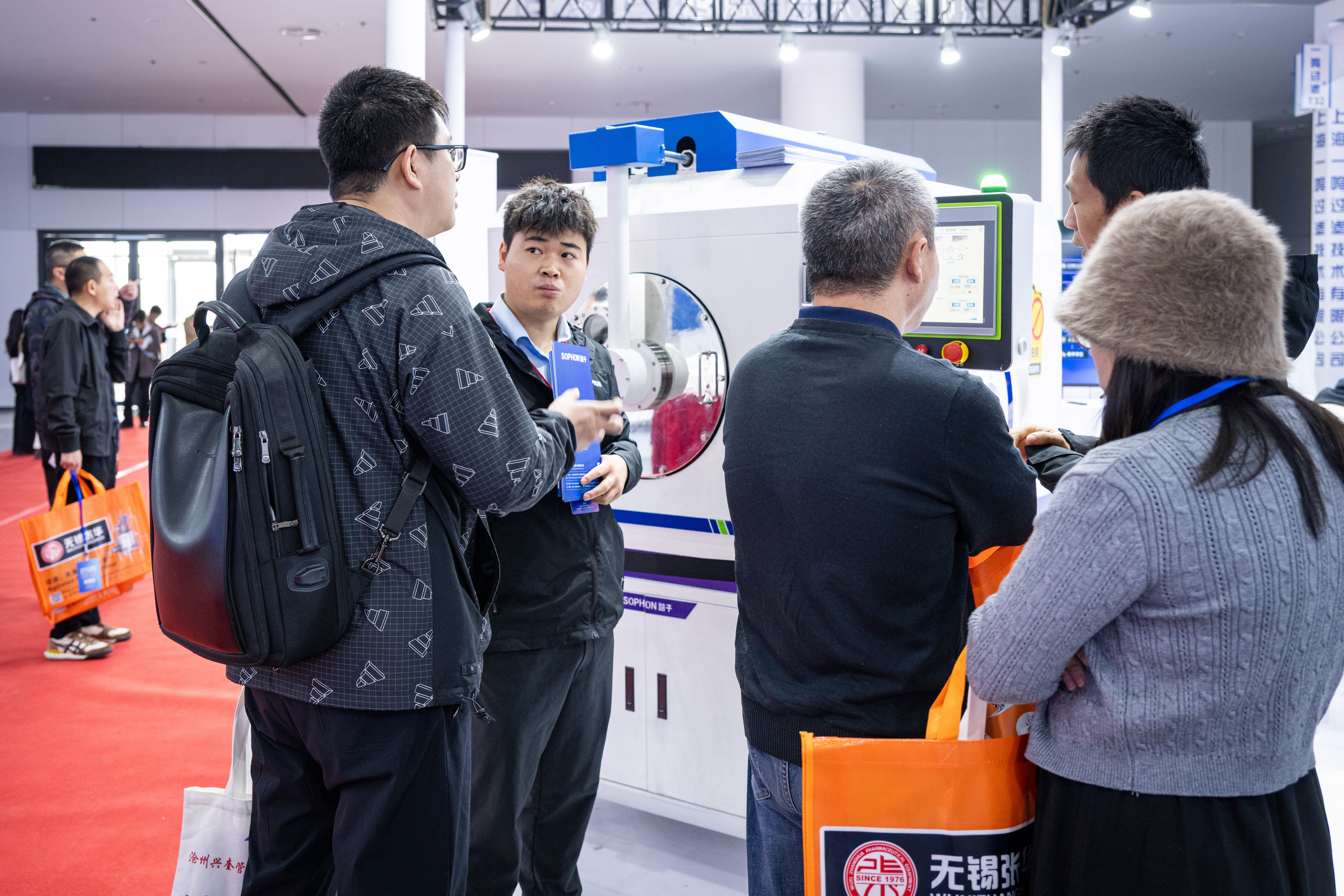
3. Advanced ALD Equipment: Atomic-level Coating and Functionalization of Powders
Advanced Atomic Layer Deposition (ALD) equipment utilizes the self-limiting reaction mechanism of vapor-phase precursors to conformally coat powder particles with uniform functional coatings ranging from sub-nanometer to micrometer scales at atomic-level precision. This equipment enables seamless functionalization of powder particles with arbitrary morphologies, achieving 100% coverage. In this way, it significantly surpasses the limitations of traditional coating methods. The equipment also adapts to a broad range of materials, capable of depositing multiple functional materials, including metals, metal oxides, nitrides, fluorides, and even polymers.
The advanced ALD solutions based on this equipment have been successfully applied in multiple cutting-edge fields:
- New Energy Industry: Surface functionalization of cathode materials (e.g., LCO, high-nickel ternary materials) significantly enhances the cycling performance and intrinsic safety of batteries.
- Pharmaceutical Industry: Enables precise control over the surface chemistry of inhaled dry powders (e.g., hydrophilicity/hydrophobicity).
- Petrochemical Industry: Ensures the efficient and stable loading and dispersion of nano-active components.
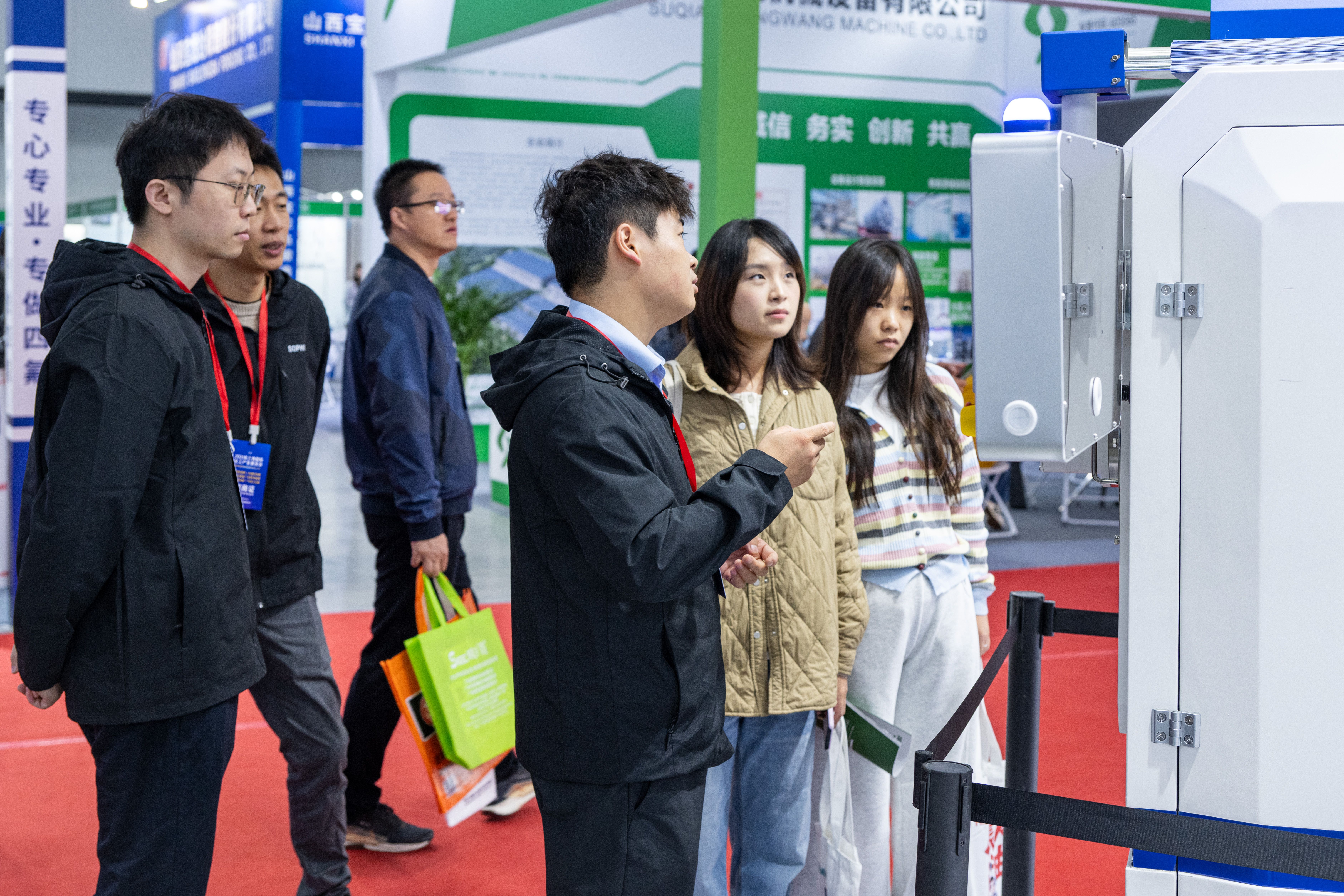
4. Hardware-software Synergy: Creating the Intelligent Nervous System for Smart Factories
The joint demonstration highlights the advantages of hardware-software integration:
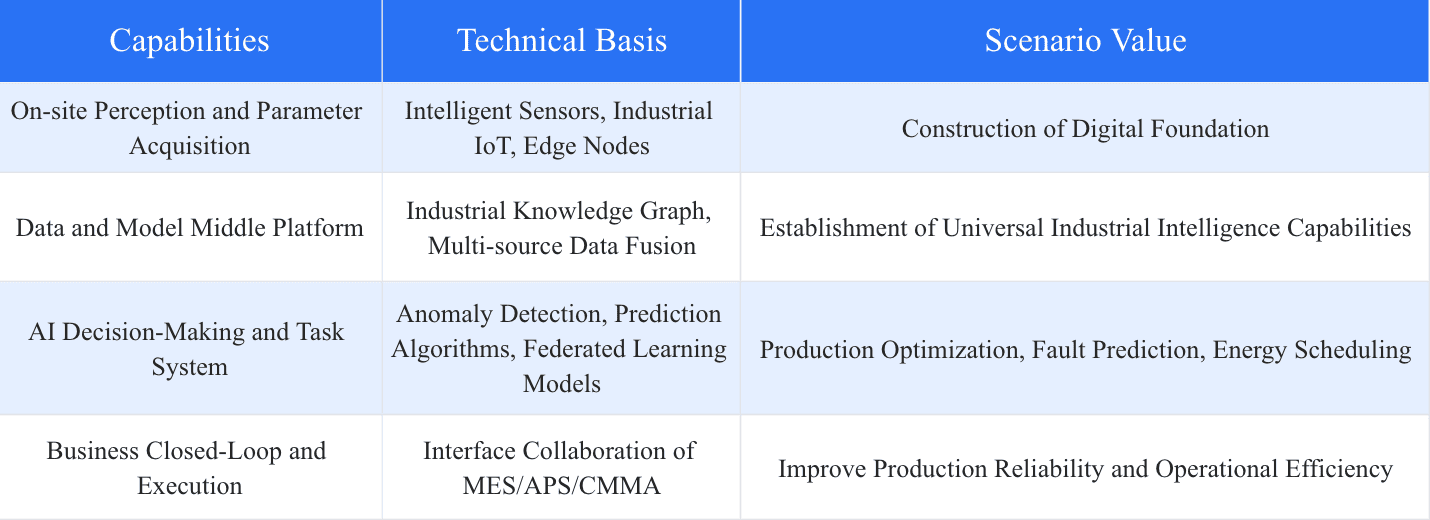
This combination emphasizes a closed-loop capability of “Perception - Analysis - Decision - Execution,” providing the structural infrastructure for smart factories.
II. Digitalization Trends and the Imperative of Transformation in the Chemical Industry
1. Safety Production Requirements Drive the Construction of Industrial Intelligent Infrastructure
Safety standards in the chemical industry are continuously being elevated, with accident risk management evolving towards “pre-emptive risk identification, digital control logic, and intelligent emergency response capabilities.” The primary pathways include:
- Real-time operating condition identification and boundary monitoring
- Digital twin and virtual simulation training of high-risk processes
- Intelligent decision-support system for the central control room
- Plant-wide early warning system for risk-sensitive variables
Safety has become a structural force driving the integration of intelligent technologies into the production organizational system.
2. Cost Pressures and Resource Constraints Drive Intelligent Production Optimization
Against the backdrop of dual energy controls, volatile raw material prices, and ongoing product mix adjustments, companies are facing mounting cost pressures and tightening resource constraints. This necessitates a turn to intelligent solutions for production optimization. In response, companies are focusing on enhancing overall production performance through specific measures:
- Device-level Energy Efficiency Profiling and Optimization
- Plant-wide Scheduling of Steam, Hydrogen, and Cooling Systems
- Optimization Models for Reaction, Separation, and Heat Exchange Processes
- Online Product Quality Prediction and Adaptive Control
These practices signify that digitalization has been upgraded from its previous role as an “Auxiliary System” to become the core driver for improving production efficiency.
3. Evolution of Plant Operation Mode: From “Automation” to “Intelligent Optimization”
Chemical companies have undergone three evolutionary stages:
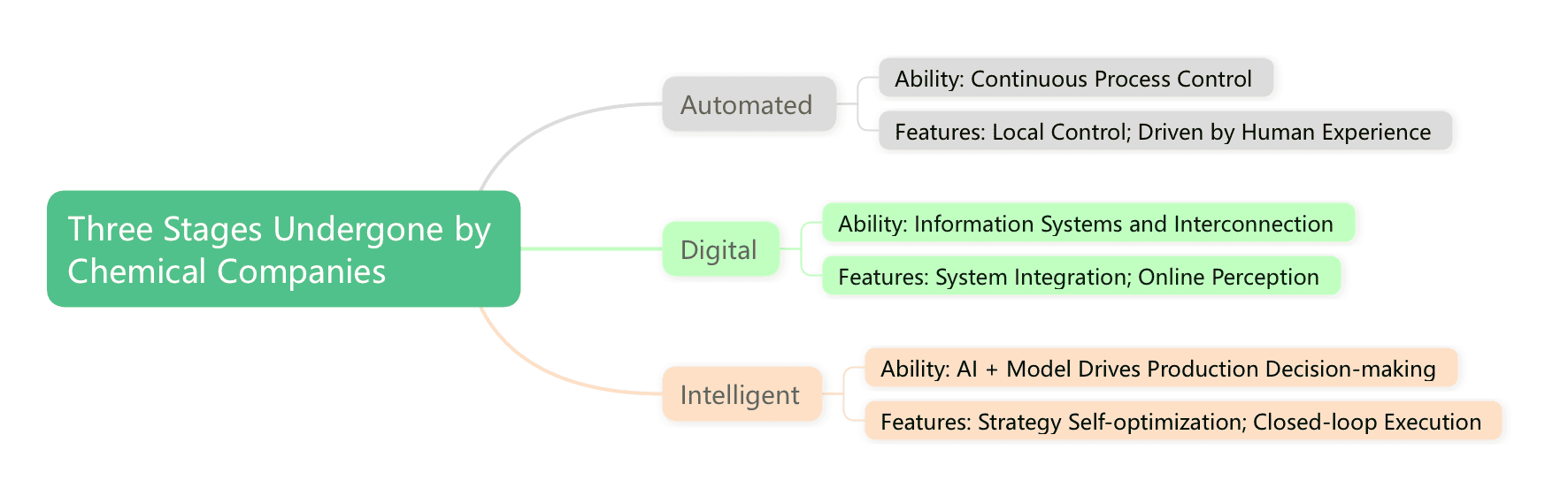
The industry’s competitive logic is shifting from “competition based on plant scale” to “competition driven by intelligent operational efficiency.”
4. Digital Platforms Acting as the Foundation for Transforming Enterprise's Organizational Models
In the future, chemical enterprises will possess three core capabilities:
- Industrial Data: Complete, trustworthy, and schedulable data
- Industrial Intelligence: Accumulation and Reuse of Model Systems
- Collaborative Operations: Middle-platform organizational structures and collaborative processes
The essence of digital transformation is the reconstruction of modern industrial and managerial competencies.
III. Redcoast & Sophon Future: Collaborating to Build the Intelligent Foundation for the Chemical Industry
Redcoast specializes in the development of digital AI platforms and industrial AI for process industries, grounded in:
- Digital Twin Engineering Systems
- Industrial Data and Model Middle-platforms
- Equipment Intelligent Agents and Predictive Maintenance
- Safety Risk and Energy Consumption Management Systems
- Plant-wide Collaborative Decision-making and Execution Systems
The company is committed to building industrial intelligent infrastructure that holistically integrates capabilities across Production, Maintenance, Safety, and Energy Consumption.
Sophon Future focus on the R&D and application of fluidized powder processing technology, grounded in:
- Manufacturing Techniques Spanning from Atomic to Macroscopic Scales
- Coating Technologies for Diverse Application Scenarios
- Intelligent Simulation Model Databases
- Customized Engineering Solutions for Client-specific Needs
The company is dedicated to the intelligent manufacturing of new powder materials.
The chemical industry has entered an era where digitalization and intelligence are the key productive forces. Upholding the principles of long-termism, technological pragmatism, and value delivery, Redcoast and Sophon Future will continue to deepen our expertise in Industrial AI, Digital Twins, Intelligent Equipment, and Industrial Collaboration Platforms. We are committed to working with industry partners to jointly build a safer, more reliable, more efficient, and more sustainable digital AI future for the chemical sector.
The Digital Factory is not a slogan, but a tangible capability system; Smart Manufacturing is not a concept, but an endogenous evolutionary path for industry.
The future is already here. We will join hands with industry peers to collectively propel China's chemical industry into a new stage of intelligent manufacturing.
The Nanjing chapter concludes with a successful closing, yet the journey of synergistic co-evolution is just beginning.