From “Visible” to “Controllable”: A New Path of Digital Governance Under Penetrating Regulation

红岸未来2026-03-24
Against the backdrop of deepening reforms and pursuing high-quality development among state-owned enterprises, a profound transformation is underway in the approach to regulation. The concept of “penetrating regulation,” repeatedly emphasized in recent years by the State Council and the State-owned Assets Supervision and Administration Commission (SASAC), is not intended to increase the burden of compliance. Rather, it demands that enterprises truly gain visibility into their operations, understand the risks they face, and clearly identify where responsibilities lie. For central and state-owned enterprises, this represents not only a compliance requirement but also an inescapable challenge of management.
In practice, however, many enterprises find that while the concept itself is not difficult to understand, the real challenge lies in how to make regulation “penetrate” down to the front lines of operations—rather than remaining confined to the level of reports and aggregated data. It is precisely in response to this practical challenge that next-generation digital technologies—such as digital twins and predictive maintenance—are beginning to serve as a critical enabler, helping enterprises transform regulatory principles into tangible management capabilities.
The approach to regulation is evolving: the issue is not “strictness,” but “lack of visibility.”
From the perspective of regulatory logic, “penetrating regulation” is not equivalent to all-encompassing control. Rather, it emphasizes three key capabilities:
- The ability to penetrate organizational hierarchies and gain visibility into actual business operations;
- The ability to break through system silos and gain access to critical data and processes;
- The ability to look beyond surface-level outcomes and identify risk trends before they materialize.
This signifies that the regulatory focus is shifting from “post-event inspection” to “process visibility,” and from “outcome-based accountability” to “process control.” Yet this precisely exposes a set of common problems that have long plagued many enterprises: lack of on-site visibility, lack of process traceability, and lack of risk predictability.
This is particularly evident in process industries such as new energy and new materials. Equipment operating status is scattered across different systems, operational and maintenance data remain fragmented, and anomaly detection relies heavily on manual experience. Once a problem occurs, it often already affects production continuity and asset safety, while also creating significant information lag for regulatory oversight.
Digital Twins: Enabling Regulation to Truly “See the Site”
Against this backdrop, digital twins are not merely a “showy” concept, but rather a capability that transforms complex industrial systems into objects that are visible, understandable, and traceable. Redcoast has observed across multiple projects that once business operations are “mirrored” through digital twins, the logic of regulation and management naturally begins to shift.
Take the digital twin for the pigging ball system as an example. Under the traditional approach, the pigging process relied heavily on manual experience and periodic verification, with the process itself being invisible and results difficult to validate. With the digital twin system, however, the entire lifecycle of the pig—from launching, traveling, and retrieval to cleaning effect assessment—is mirrored in real time within the system:
- Pipeline structure, valve status, and operating parameters are clearly visible;
- Pig position, speed, and travel trajectory are trackable in real time;
- Cleaning effect and parameter adjustments form a closed-loop validation system.
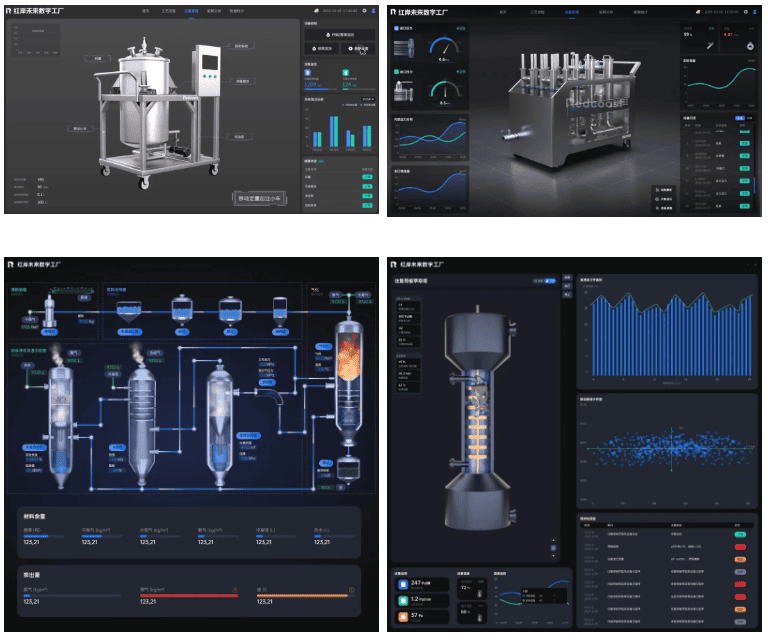
In this scenario, supervision is no longer about “verifying after the fact whether something was completed,” but about being verifiable, reviewable, and accountable throughout the entire process. This is precisely the true manifestation of penetrating supervision at the industrial field level.
Predictive Maintenance: Shifting Risk Forward, Rather Than Pursuing After-the-Fact Accountability
If digital twins address the challenge of “visibility,” then predictive maintenance addresses the challenge of “early visibility.”
Within the state-owned enterprise regulatory framework, equipment safety, production continuity, and asset operation risks have always been core areas of focus. In practice, however, most risks do not emerge suddenly—rather, they result from long-term accumulation and gradual evolution. The critical question is whether enterprises possess the capability to identify these risk signals before they materialize.
Across multiple predictive maintenance projects for equipment, Redcoast has developed health assessment and fault prediction models for critical assets through the continuous acquisition and analysis of multi-source data—including vibration, temperature, current, and process parameters.
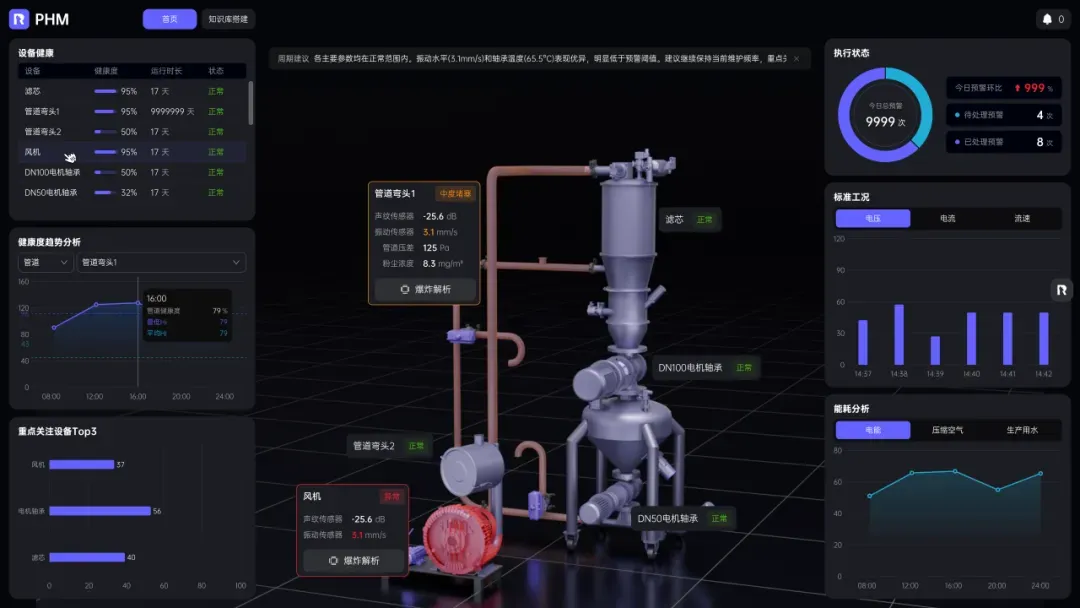
For example, regarding a critical rotating machine in a chemical plant:
- The system identified bearing anomaly trends several weeks in advance;
- The maintenance team addressed the issue within the planned maintenance window;
- Unplanned downtime and cascading production risks were avoided.
From a regulatory perspective, the value of this capability lies not only in reducing incidents, but more importantly in ensuring that risks are “identified and managed.” What regulators focus on is no longer just the outcome of incidents, but whether enterprises have established effective mechanisms for risk early warning and response.
From “Reporting Data” to “Using Data”: The Natural Evolution of Regulatory Logic
Under the traditional model, regulation relied heavily on periodic data submissions, summary reports, and special briefings from enterprises. This approach, particularly in the context of complex organizational structures and rapidly changing operations, is highly susceptible to information lags and distortion.
In practice, Redcoast emphasizes a different approach: embedding regulation directly into operational systems.
By combining digital twin platforms with predictive maintenance systems, enterprises can establish a unified data view:
- Production status, equipment operation, and energy efficiency indicators are presented in real time;
- Key risk indicators are dynamically updated;
- Critical events and operational processes are fully traceable.
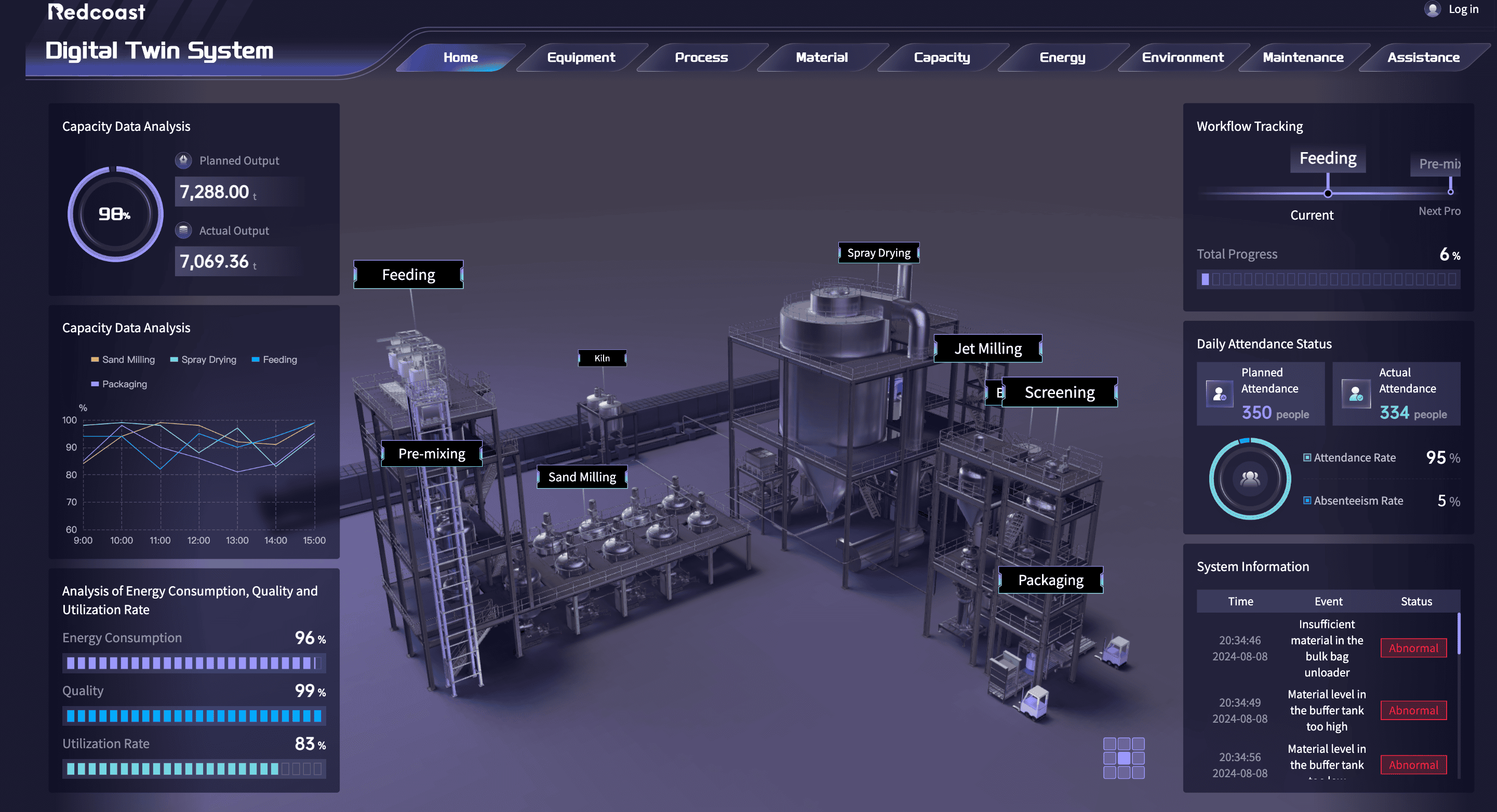
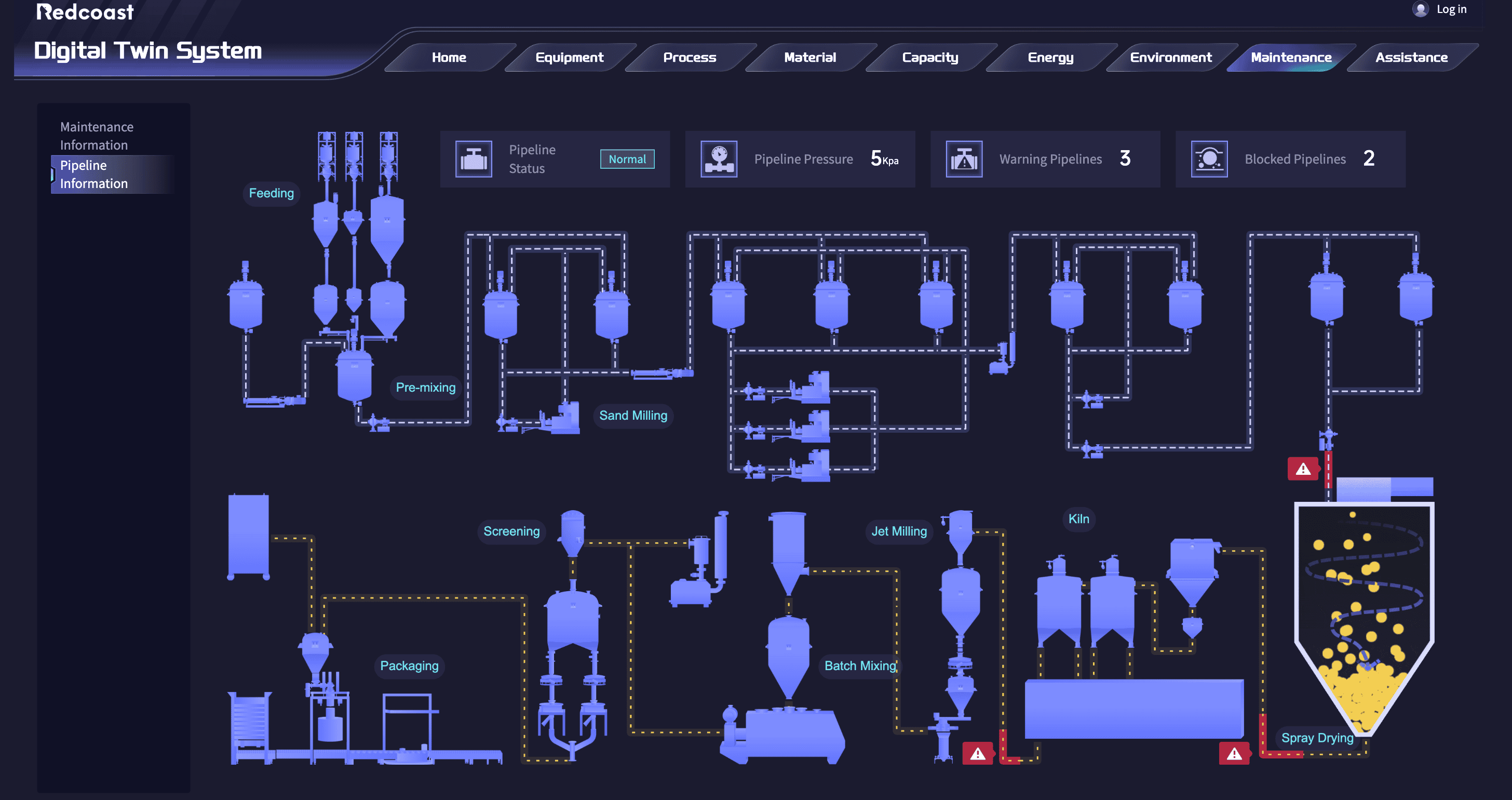
Under such a system, regulation is no longer an additional burden, but rather a natural outcome of business operations. Data is “generated for operations” and also “utilized for regulation,” enabling a single source of data to deliver multiple layers of value.
Redcoast’s Approach: Not “Regulation for Regulation’s Sake”
As a technology company focused on industrial digitalization and intelligent O&M, Redcoast does not view penetrating regulation as a standalone objective. Rather, it integrates this concept into the broader building of enterprises’ digital governance capabilities.
In practice, Redcoast focuses on three key questions:
1. Whether the business mechanism is truly understood
All digital twins and predictive models are built upon a deep understanding of process flows, equipment mechanisms, and on-site operational logic—rather than being simple data stacking.
2. Whether the system serves real management scenarios
The system is not designed for mere demonstration, but rather to directly support operational decision-making, risk control, and management coordination.
3. Whether it has the capacity for continuous evolution
Capabilities can be continuously expanded—from single equipment to system-level digital twins, and from predictive maintenance to comprehensive asset management—rather than being a one-time implementation.
This approach enables digitalization initiatives to not only meet regulatory requirements, but also genuinely enhance an enterprise’s own management efficiency and operational resilience.
Conclusion: What Penetrates is not Hierarchies, but Capabilities
Returning to the concept of “penetrating regulation” itself, its ultimate goal is not to impose more constraints on enterprises, but rather to enable them to establish governance capabilities that are visible, controllable, and stable.
When digital twins make the site transparent, and when predictive maintenance enables risks to be exposed early, regulation naturally becomes more targeted and more efficient. For enterprises, this is not merely a matter of compliance—it is also a source of competitive advantage.
Redcoast is committed to leveraging continuous technological and practical exploration to help more enterprises transform regulatory requirements into long-term capabilities, thus ensuring that digitalization truly serves as a bridge connecting policy, management, and the operational front line, rather than remaining confined to documentation and systems.