From Data Chaos to Predictable Control: A Key Step in Factory Intelligence

红岸未来2026-01-12
When it comes to the data foundation of a factory, what exactly is missing?
As the process industry and manufacturing accelerate their shift toward intelligence, “data” is repeatedly emphasized as the core asset of a factory. A growing number of enterprises are beginning to discuss AI, predictive maintenance, and intelligent decision-making. Yet the reality is that while systems are deployed and models are running, truly valuable outcomes remain few and far between.
Is the problem really that AI isn’t advanced enough? Not at all. What truly limits the implementation of intelligence is the underlying data in the factory itself.
I. Data is Everywhere, Yet It Remains “Unusable”
Walking into most factory workshops, there is no shortage of data:
- PLCs and DCS continuously collect process parameters;
- MES records production execution;
- ERP reflects operational outcomes;
- Equipment inspection and maintenance records are scattered across Excel files, ledger, and paper documents.
At first glance, the volume of data may seem substantial. However, once it comes to analysis and decision-making, problems emerge:
- Data is scattered across different systems, unable to form a complete chain.
- Inconsistent standards among systems lead to multiple interpretations of the same metric.
- Critical equipment operation data is either missing or fragmented.
- Data lacks business context, making it unable to support judgment and optimization.
Data exists, but it is not reliable. Data is acquired, yet it cannot be understood.
Advancing AI on such a foundation is, in essence, making inferences with incomplete and unverifiable data. Naturally, the results are hardly convincing.
II. The fundamental reason why AI fails to be implemented is its unstable “data foundation”.
From numerous digitalization practices in factories, the core reasons why AI struggles to deliver tangible value can be distilled into the following three levels.
1. Equipment Layer: Incomplete Data at the Source
Many factories still rely on outdated equipment, which suffers from issues such as closed interfaces, missing sensors, and insufficient sampling frequency. Equipment failures often leave behind only the “outcome”, without comprehensive process data to support analysis. As a result, AI cannot learn the true operational patterns of the equipment, let alone identify risks in advance.
2. System Layer: Lack of Unified Data Standards
DCS, MES, and ERP each address their own specific challenges, yet they lack a unified data model:
- The same piece of equipment may be identified differently across systems.
- The same parameter may carry different meanings in different contexts.
- Timeline and operating conditions cannot be aligned.
- Data cannot be interconnected, limiting analysis to isolated segments.
3. Business Layer: Data Disconnected from Production Context
Vast amounts of data are merely “stored” without clear links to processes, operating conditions, materials, or shifts. Even when anomalies are identified, it remains difficult to assess their business impact or determine the priority of response.
AI can calculate “anomalies”, but it cannot answer whether they are “worth addressing”.
III. Redcoast’s Approach: Solidify Data First, Then Discuss Intelligence
In the digital transformation of factories, Redcoast consistently adheres to one principle: AI is not the starting point; the data foundation is.
1. Reconstruct the Equipment-Level Data Foundation—Making Data “Reliable” Through industrial data acquisition and edge computing capabilities, Redcoast enables:
- Compatibility with both old and new equipment via multi-protocol integration
- Collection of critical operational, load, and condition parameters
- Continuous construction of standardized equipment-level data profiles
This transforms equipment from “experience-driven” entities into “data-observable” objects.
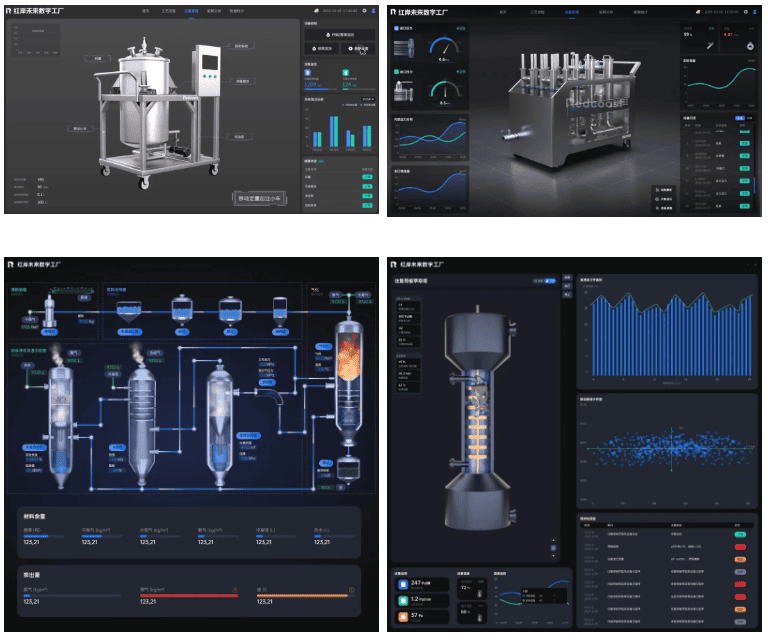
2. Unify Data Logic with Digital Twin as the Core
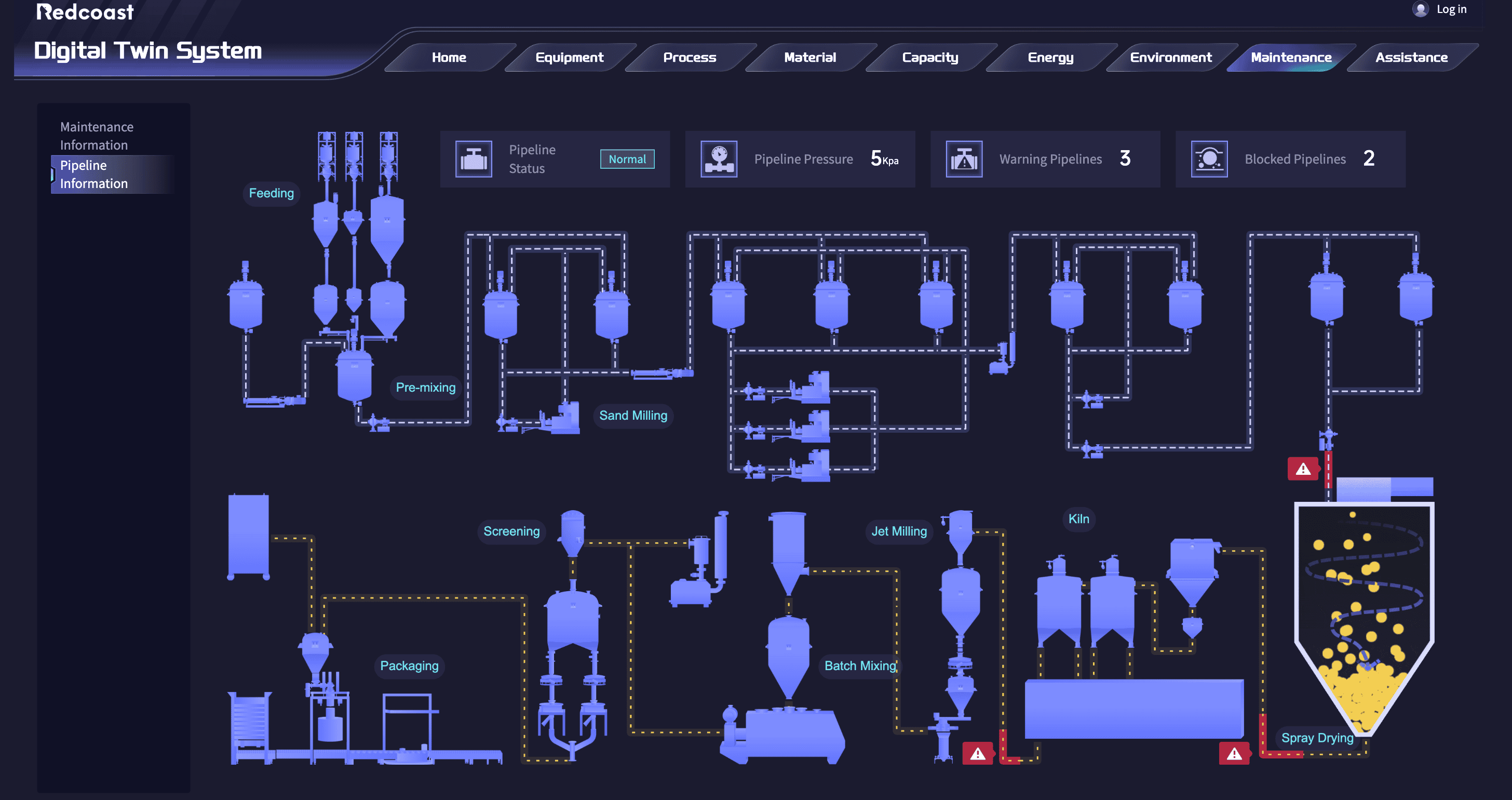
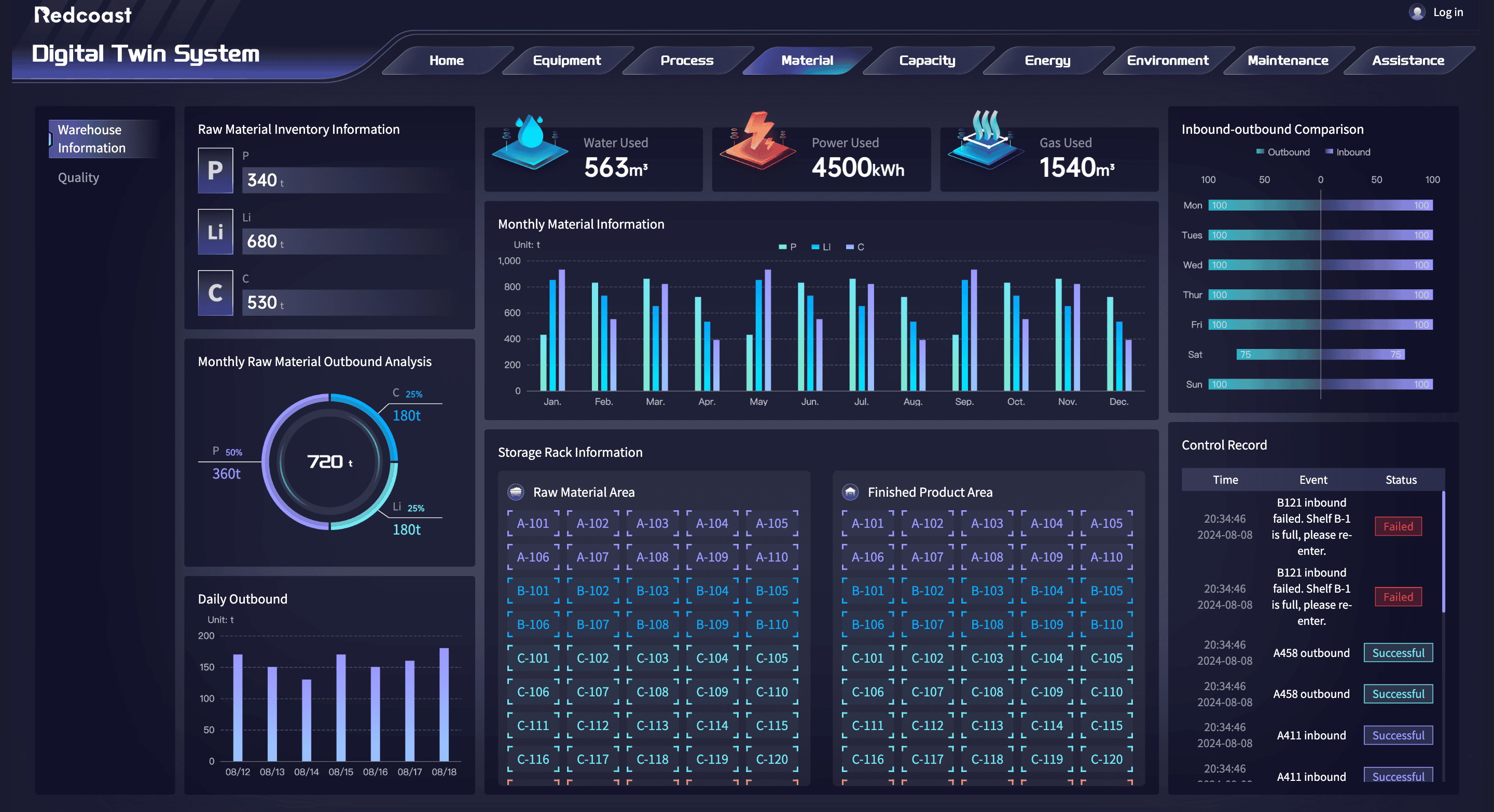
Redcoast’s digital twin goes beyond visualization—it serves as a central data hub that:
- Unifies modeling of equipment, production lines, processes, and spatial structures
- Integrates multi-source data from DCS, MES, ERP, and other systems
- Establishes traceable timelines and operational context
This marks the transition where data begins to become “structured, meaningful, and historically contextual”.
IV. From Prevention to Prediction: Enabling Data to Generate Value
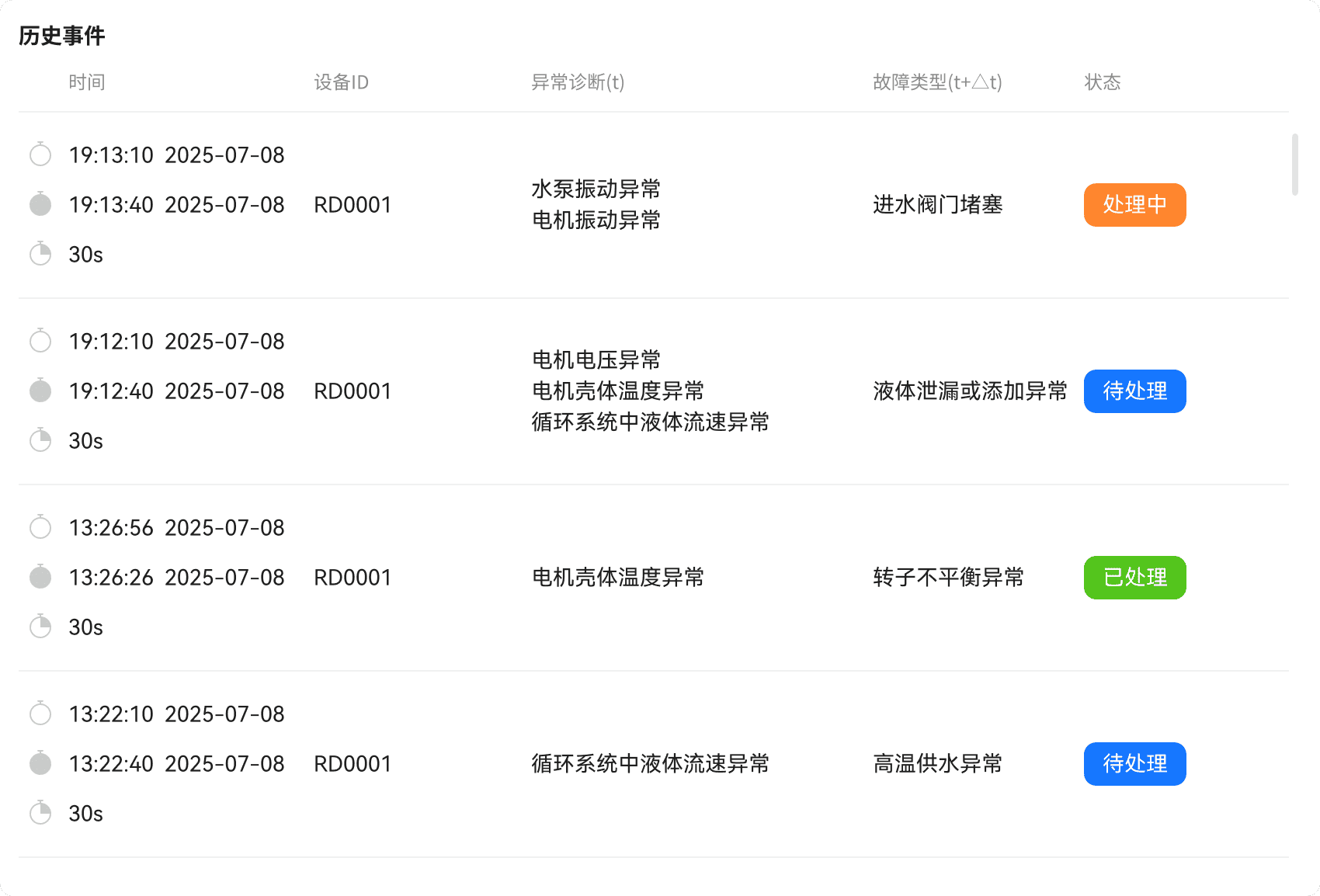
1. Preventive Maintenance: Eliminating Risks at an Early Stage
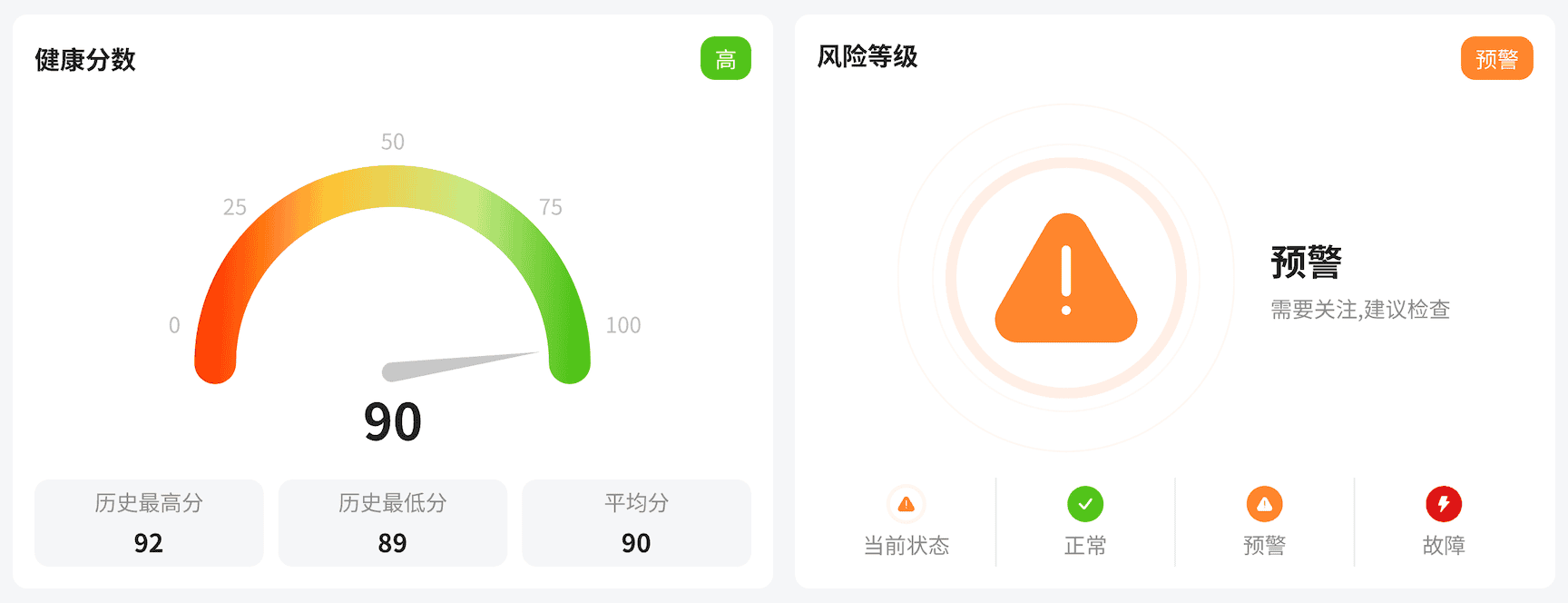
Built upon a stable data foundation, the system enables:
- Continuous monitoring of equipment health status
- Early warnings of abnormal trends
- Digital accumulation of operational experience and rules
Maintenance no longer relies on on-the-spot judgment but is instead based on the evolution of long-term data.
2. Predictive Maintenance: Providing Maintenance with a “Head Start”
Once data achieves continuity and reliability, AI models can truly contribute by:
- Predicting failure risks of critical components
- Providing well-timed maintenance recommendations
- Optimizing downtime scheduling and spare parts management
Ultimately enabling precise maintenance that minimizes disruption to production.
V. Conclusion: Before Becoming an “AI Factory”, First Become a “Data Factory”
It is foreseeable that factories in the future will undoubtedly become more intelligent. However, what truly determines the level of intelligence is not the sophistication of the algorithms, but whether data is systematically understood and governed.
Redcoast has always upheld one conviction: AI without a foundation of high-quality data can only remain at the demonstration level. Only when a factory truly solidifies its data foundation, achieving unified, reliable, and traceable data, can AI transform from “seemingly impressive” into a core capability that genuinely contributes to production decision-making.
At that point, data in the workshop will no longer merely “pile up into mountains”, but will instead become a key asset supporting the enterprise’s continuous optimization and evolution.